
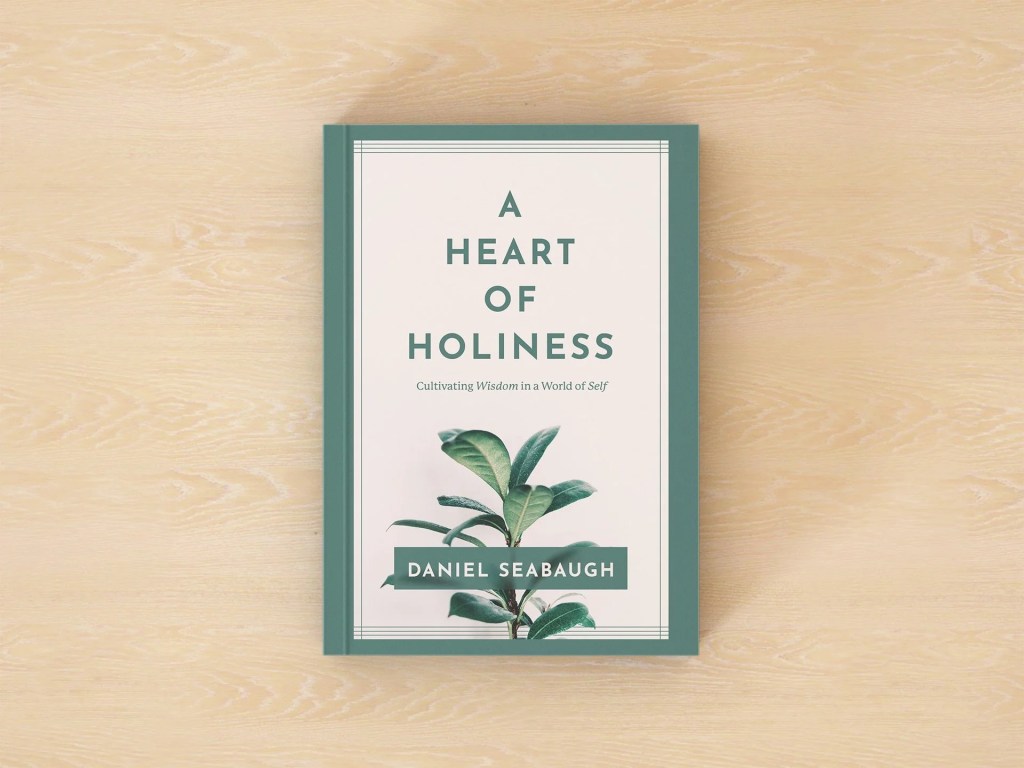
Authors note: This is an excerpt from my forthcoming book, A Heart of Holiness: Cultivating Wisdom in a World of Self, which is set to release this spring.
Keep your lives free from the love of money and be content with what you have, because God has said, “Never will I leave you; never will I forsake you.”
—Hebrews 13:5 NIV
Greed is a major problem today. From politicians to banking executives, insurance companies to car salesmen, greed has a tight grip on people. But it’s more noticeable in others than it is in ourselves. We’re blind to our own greed. We eagerly embrace the narrative that money can provide us security and freedom, then set off on a journey to make as much as possible, ignoring the greed lurking in our own hearts. Some of us spend our lives pursuing money without realizing how detrimental it is to our well-being.
Fixating on money corrupts and enslaves us to a life of hustle. In the beginning, our desire is harmless, wanting to provide for our basic needs and the needs of those under our care, but in the end, our desire to make more and more consumes us. It’s a trap I’ve seen many times.
Consider parents. To provide for their family, many obsess over stacking cash and become nonexistent in the home. When a spouse or child confronts them, they become irritated, argumentative, and illogical. What starts as a caring act ends as a point of tension for many families.
Or consider business owners. To rise above competitors, many cut corners, disregard the poor working conditions of their employees, and make immoral decisions. They begin a ruthless pursuit of the dollar, stepping over anyone who hinders their success.
Greed arrives unannounced. It sneaks up on its victims to choke the life out of them. Timothy Keller says,
Why can’t anyone in the grip of greed see it? The counterfeit god of money uses powerful sociological and psychological dynamics. Everyone tends to live in a particular socioeconomic bracket. Once you are able to afford to live in a particular neighborhood, send your children to its schools, and participate in its social life, you will find yourself surrounded by quite a number of people who have more money than you. You don’t compare yourself to the rest of the world, you compare yourself to those in your bracket. The human heart always wants to justify itself and this is one of the easiest ways. You say, “I don’t live as well as him or her or them. My means are modest compared to theirs.” You can reason and think like that no matter how lavishly you are living.
Greed is sneaky. It deceives us and leads us down a path of comparison. We become frustrated—endlessly spinning our wheels for wealth while frowning upon the greedy people of the world, especially those who take our slice of the pie.
It’s widely reported that John D. Rockefeller, one of the wealthiest men who ever lived, was once asked how much money is enough, to which he replied, “Just a little bit more.” Whether the encounter happened or not, we all believe a little bit more money would improve our lives and make us happier. We strive, therefore, working ourselves to death and filling our time with activities that ultimately produce anxiety and stress, enemies of happiness. We overextend ourselves for the accumulation of “a little bit more.”
Greed is a major problem, no doubt. It’s a sin we must guard against (Luke 12:15). When we give ourselves over to the pursuit of money in a way that is ultimate and god-like, our appetite for more goes unquenched. In the long run, we wind up feeling lied to because money over-promises and under-delivers. Money can’t provide us with security, happiness, or contentment.
Furthermore, apart from the work of the Holy Spirit in a person’s heart, no one is truly neutral when it comes to their desire for money. Those without money believe life would be better with it. Those with money believe life would be better with a little more. Such a perspective makes contentment very difficult. Hebrews commands us to keep our lives free from the love of money for this precise reason.
Money doesn’t only make us greedy, though; it can also lead to idolatry. I once worked with a girl who was very talented at singing and dancing. She’d share videos of her performances with our team from her various social media accounts. These videos made quite a splash online. A couple went viral. It surprised me to see how many followers she had, not because she wasn’t talented; she certainly was, but because I didn’t believe such things happened to people living in Southeast Missouri.
One day, I asked her what she hoped to accomplish with all the attention garnered online. She told me, “I’m going to be a world-famous influencer. Everyone will know my name. I’ll travel the world. My performances will sell out. I’ll have more money than I know what to do with.”
I replied, “That’s so cool! I hope this works out for you. I can tell you really love what you’re doing.” She nodded with enthusiasm.
“What are you going to do if it doesn’t work out?” I asked, mostly out of curiosity. “Do you have something else in mind?”
She looked at me like I was speaking in tongues.
“Oh, it’s going to work out,” she exclaimed. I continued to press her.
“Yeah, I know you’re hopeful. But what if it doesn’t?” She did not let my questioning deter her one bit.
“This is my whole life, Daniel!”
No matter what I said, she wasn’t going to let my questioning stop her from achieving stardom. She convinced herself that fame wasn’t a matter of if, but when.
As far as I know, she never became world-famous. In fact, I don’t know where she is today. She slipped into idolatrous behavior without realizing it. Idolatry happens when we take good things and make them ultimate things. For my friend, her desire for fame became an idol. She couldn’t imagine a fulfilling life without it.
Idolatry happens when we replace God with something else. We look to idols for significance, purpose, and meaning in life. We spend our energy investing in them. We become agitated when people criticize them. We assume anyone who speaks against them is against us.
One of the best ways to determine whether something has become an idol is to ask the question, “Would I still be happy if this thing were no longer in my life?” Jesus said, “Where your treasure is, there your heart will be also” (Matthew 6:21). If our happiness is dependent on something other than God, we have an idol.
Idols may provide happiness for a season, but if we live long enough, they will lose their ability to fulfill us. For instance, if youth and beauty are idols, we’ll feel crushed by the reality of aging. If money is an idol, a serious economic downturn will fill us with fear and anxiety.
In the Old Testament, idols were worshiped often. They generally took the form of images made of wood, stone, or metal and were believed to embody pagan deities. These gods were called upon to bring about certain desirable results. Whether rain for crop production or fertility for life, people clung to their idols in hopes of receiving blessings. In the West, idols rarely look like statues or images but often take the form of status and self-image. We also seek blessings from our idols by believing they’ll fulfill us and make us great if we give them proper attention.
God has always forbidden the worship of idols, regardless of their form. The first of the ten commandments says we shall have no other gods before him (Exodus 20:3). Even though our idols look different, they are just as destructive as those found in the Old Testament.
Here’s a list of some common idols found in our world. It’s far from an exhaustive list, but it will hopefully provide an idea of the vast range of idolatry. Notice how the items listed are mostly good things. Idolatry usually takes good things and turns them into ultimate things.
- Money
- Sex
- Career
- Youth
- Beauty
- Power
- Ethnicity
- Political Affiliation
- Marriage
- Ideology
- Parenting
- Retirement
- Inheritance
- Hobbies
- Nature
- Education
- Religion
- Comfort
- Approval
- Success
- Art
- Sports
- Automony
- Status Symbols
These idols, and a whole slew of others, vie for our attention. We give our lives to them because of their harmless appearance and delightful claims. Yet as God’s dearly loved children, we must keep ourselves from idols (1 John 5:21).

What People Are Saying
If there were ever a time when Christians needed clear, biblical, grace-saturated teaching on what it means to live a holy life, it is now. In these pages, Daniel Seabaugh has given us a great gift as he instructs us in what it means and looks like to humbly and joyfully walk in holiness before our holy God. I am confident you will be greatly helped and encouraged as you soak in the truth and wisdom found in this little book. I will be recommending A Heart of Holiness to people for years to come.
Mark Hallock, pastor at Calvary Church in Englewood, Colorado
We’re so accustomed to the media encouraging us to live for ourselves that the message becomes white noise. But that noise affects us in more ways than we realize. I’m thankful Daniel has written A Heart of Holiness to sing the song of wisdom, a song more biblical and beautiful than the banality of self. Make sure you read to the end of the book, because I found the last chapters on aging and death particularly challenging and encouraging. I’m sure others will, too.
Benjamin Vrbicek, lead pastor at Community Evangelical Free Church in Harrisburg, Pennsylvania, managing editor for Gospel-Centered Discipleship, and author of several books






 Daniel Seabaugh
Leave a comment