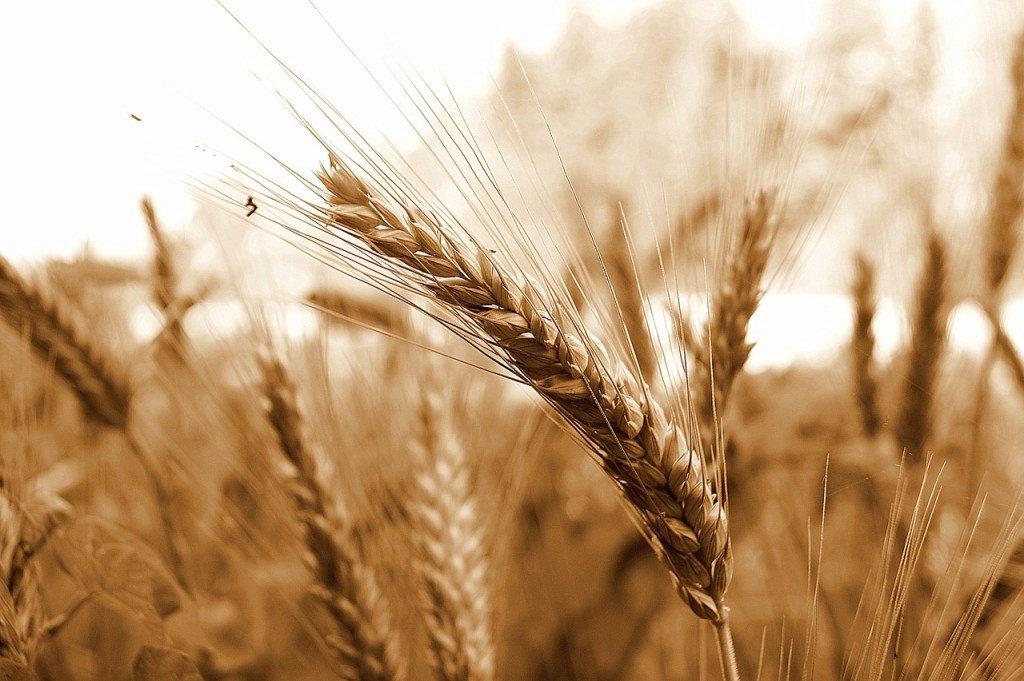
The Son of Man will send out his angels, and they will weed out of his kingdom everything that causes sin and all who do evil.
—Matthew 13:41 (NIV)
If you want to have a really bad day, Google the top news stories from last year. I did that recently and was reminded that we live in troubling times.
In case you need convincing, three of the top stories from 2022 were:
- Russia invaded Ukraine, igniting a bloody conflict that’s ongoing.
- A gunman in Uvalde, TX killed 19 students and 2 teachers.
- A suspect was arrested and charged with first-degree murder in the deaths of four University of Idaho students.
We live in troubling times, indeed.
When events like these happen, I think it’s natural to ask the question: Why doesn’t God do something? Why doesn’t he do something about evil, pain, injustice, tragedies, suffering?
One of my jobs at La Croix Church is overseeing the Alpha Course. The Alpha Course is a 10-week class where people gather to ask tough questions about life, faith, purpose, and meaning. The course has run at our church for more than seven years, and every round the number one question is essentially the same. Why doesn’t God do something about evil?
The case I want to make here is, God will do something about evil, and he has done something. He will and he has.
HE WILL
Jesus often taught in parables. In Matthew 13:24-30, Jesus taught the parable of the wheat and weeds. It’s likely you know it as the parable of the wheat and tares, a title which has led some to call this Jesus’ “tari-ble parable.” This parable is amazing. It doesn’t provide an answer to the question about evil, but it does give a clue to what the answer might be.
Have you ever read a passage of Scripture and wished you had Jesus or an expert available to explain it to you? That’s what happened to the disciples. They were confused by the parable and approached Jesus for some clarity. Unlike many of his parables, Jesus gave a detailed explanation.
He said he’s the sower, the field is the world, and the children of the kingdom are the “good seed.” He also said Satan sows seeds, and weeds represent children of the evil one. In addition, angels are harvesters who come at the end of the age to sort out the wheat from the weeds (vs. 37-39).
A couple general observations may prove helpful. First, Jesus talked a lot about the kingdom of God during his ministry. If there is a kingdom, there must be a King. Jesus is the King. He’s ruling and reigning this very moment. But he’s not a dictator or harsh ruler. Jesus is gentle and humble in heart (Matthew 11:29).
Another observation is the enemy sows weeds while we sleep (13:25). I don’t believe sleep is a negative thing here. Rather, kingdom work is hard and people who do it are tired and deserve a good night’s rest. But Satan never sleeps. He sows seeds in our lives, our world, and even our churches. Weeds are frustrating on every front.
In our lives, weeds mean nothing is perfect. A few years ago, I bought a bicycle painted the prettiest color blue on the planet. I knew the bike would be perfect. Upon getting it home, I discovered a scratch along the head tube. The paint I drooled over for months was suddenly not perfect.
Or when I cut my lawn and stand back to admire its beauty, I know within days it will be back, probably with weeds in the mix. Nothing in life is perfect. Nothing in life lasts forever.
We also see weeds in our world. For example, if you’re on the political right, it’s easy to believe those on the left are weeds. If you consider yourself a moral, law-abiding citizen, anyone you feel is an immoral, law-breaking citizen is a weed.
It’s even tempting to identify things in our churches as weeds. In worship, do we use an electric guitar or stick with the organ? In the sacraments, do we baptize babies or only professing adults? We hunt for weeds in what could be wheat. Many times, it’s hard to tell the difference.
Commentators believe the weeds in Christ’s parable are darnel. Darnel grows next to wheat stalks and are not easily distinguished from real wheat. Farmers can’t identify it until harvest.
DEALING WITH WEEDS
We generally respond to weeds in two ways. First, when they come, we accuse God and allow doubts to surface. Our accusations are subtle, but real. In verse 27, the servants ask, “Sir, didn’t you sow good seed in your field? Where then did the weeds come from?” Are you accusing God of something in your life? Is something not going your way? Is God behaving in a way you think he shouldn’t?
God responds to our doubts succinctly. “An enemy did this” (v. 28), he says.
God is not responsible for evil. As you’ll recall, when he created the world, it was “very good.” The world broke when Adam stopped listening to God and started listening to Satan. Likewise, when we stop listening to God and start listening to Satan, things break.
The second way we respond to weeds is by taking action. In verse 28b, the servants ask, “Do you want us to go and pull them up?” We try to pull up weeds and tear apart the power structures of this evil world. We fight culture wars. But the work of judgement belongs to Christ. He has not given it to us to do.
Patience is at the heart of this parable. God is patient. We must also be patient.
The LORD—the LORD is a compassionate and gracious God, slow to anger and abounding in faithful love and truth, maintaining faithful love to a thousand generations, forgiving iniquity, rebellion, and sin. But he will not leave the guilty unpunished, bringing the consequences of the fathers’ iniquity on the children and grandchildren to the third and fourth generation.
—Exodus 34:6-7 (CSB)
The Lord is not slow in keeping his promise, as some understand slowness. Instead he is patient with you, not wanting anyone to perish, but everyone to come to repentance.
—2 Peter 3:9 (NIV)
God will do something about evil. At the end of the age, Jesus will send out his angels to sort out the wheat from the weeds (Matthew 13:41). He will do something, but he also has done something.
HE HAS
On the cross, Jesus took our sin and bore our punishment.
He was despised and rejected by men, a man of suffering who knew what sickness was. He was like someone people turned away from; he was despised, and we didn’t value him. Yet he himself bore our sicknesses, and he carried our pains; but we in turn regarded him stricken, struck down by God and afflicted. But he was pierced because of our rebellion, crushed because of our iniquities; punishment for our peace was on him, and we are healed by his wounds. We all went astray like sheep; we all have turned to our own way; and the LORD has punished him for the iniquity of us all.
—Isaiah 53:3-6 (CSB)
Timothy Keller defined the gospel as being “more wicked than we ever dared imagine, but more loved and accepted in Christ than we ever dared hope.” Do you think things are bad? It’s worse than you think. Have you glimpsed a bit of God’s love and mercy? You don’t know the half of it. We are so ridiculously loved. Words can’t describe God’s magnificent love for us.
I was once a weed. You were once a weed. If the church ignored us or pulled us up, it’s doubtful we’d be walking with Christ today.
Those who are weeds today may be wheat tomorrow.
—St. Augustine
Pastor Collin Smith, while teaching on this parable, provided some helpful words. He said, “Always remember, the mission of the church is sowing seeds not pulling weeds. We have a big enough challenge on our hands trying to deal with sin in our own hearts, our own families, and our own churches. It is not in our power or calling to root it out in the world. That is the work of Christ, and he will do it when he comes.”
He will do it when he comes. He has done it on the cross. We should leave the weeds to God.
Author’s note: This content is from a sermon I preached at Christ Evangelical Church in Cape Girardeau, MO on July 23rd, 2023.








 Daniel Seabaugh
Leave a comment